.webp)
Companies and software referenced
Each company links to an official product page or primary source relevant to this guide. Logos identify the referenced organisation and do not imply endorsement.
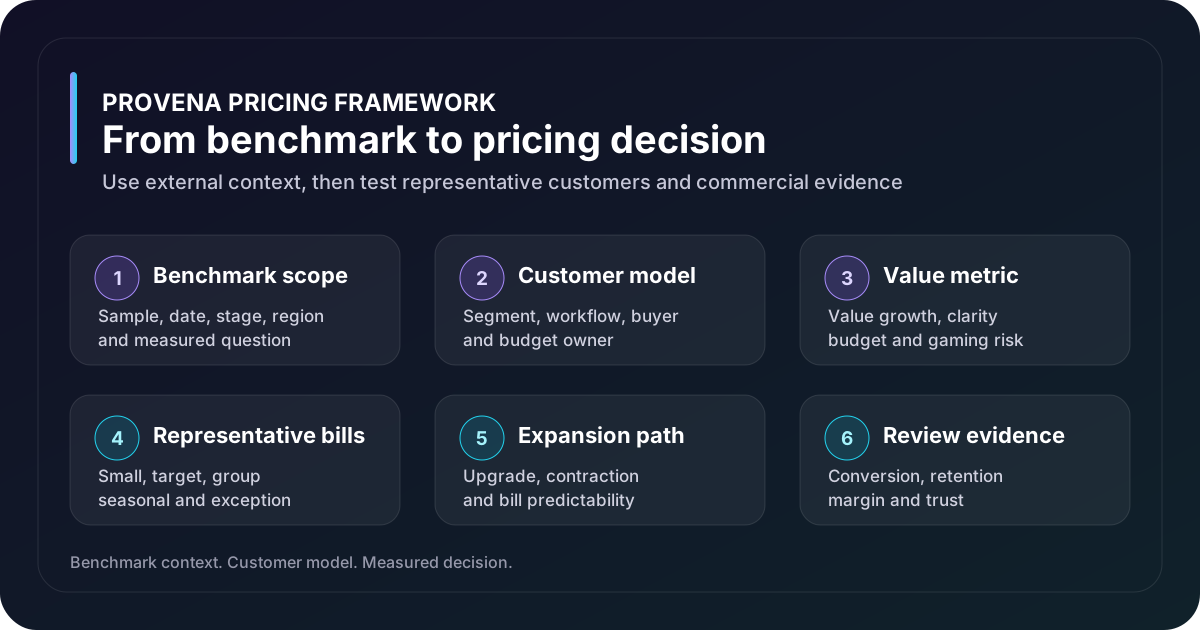
There is no universal vertical SaaS price benchmark. Tidemark's 2025 report gathered data from 210 companies and describes monetisation patterns, but it does not publish a price list for one workflow or customer. Use it to frame questions, then choose a value metric that follows how customer value grows. Common models are per user, location, account, asset, transaction, workflow volume or a base platform fee with usage. Test representative customers, bill predictability, service cost, expansion and difficult exceptions before launch.
What do vertical SaaS pricing benchmarks show in 2026?
Vertical products may combine software, payments, hardware, implementation, data, support and AI. One price label can hide different margins and customer expectations, especially when the product serves both small operators and complex groups. A benchmark drawn across several industries cannot resolve those differences for one company. Model representative customers at several sizes and usage levels. Compare price, customer value, cost to serve, budget predictability, sales friction, expansion and contraction under each candidate metric. Use external benchmarks to challenge assumptions, then use buyer research and actual conversion, retention and expansion evidence to make the decision.
What should a practical review of vertical SaaS pricing strategy examine?
We reviewed the full Tidemark 2025 Vertical and SMB SaaS benchmark report, its current official summary and Stripe pricing guidance updated on 7 April 2026. Quantitative statements remain tied to those primary sources. We did not use secondary pricing roundups, invented market averages or a universal recommended price. The review uses official documentation and independent practical analysis.
| Step or choice | Best fit | Desired outcome | Risk to manage |
|---|---|---|---|
| Per user pricing | collaborative workflows where more active users create more value | simple quoting and a familiar budget unit | customers may restrict access and weaken adoption |
| Per location or operating unit | restaurants, dealerships, clinics, branches and service businesses | pricing can follow an existing organisational budget | locations vary greatly in volume, complexity and value |
| Per record, asset or workflow | products whose value follows managed matters, vehicles, jobs, units or claims | the metric reflects industry activity more closely than seats | customers can struggle to forecast or may avoid recording work |
| Transaction or payments pricing | platforms embedded in commerce or money movement | revenue can expand with customer activity and direct value | volume volatility, fees, disputes and regulation increase complexity |
| Hybrid platform and usage pricing | products with baseline operating value and variable service cost | a base fee supports predictability while usage captures expansion | the model takes more effort to explain and bill accurately |
How should founders use the 2025 vertical SaaS benchmark?
Tidemark gathered data directly from 210 vertical SaaS companies across several sectors, funding stages and regions. The report says its medians and distributions are guideposts that should be interpreted through vertical market dynamics, customer profile and company stage. It is not a universal price list.
Tidemark reports that 86 per cent of respondents with AI features charged for them in some form. Its pricing categories can overlap because some companies combine models. This supports testing several monetisation structures, not copying a percentage or charging separately for every AI feature.
Stripe describes per seat, tiered, usage, hybrid and outcome models with different predictability and incentive tradeoffs. Its April 2026 guide says a strong value metric should grow with customer value, be understandable, resist gaming and align with how customers budget.
For platforms adding payments, model software revenue, transaction economics, disputes, support and provider dependence separately. A payments contribution should not conceal weak core product retention.
Which parts of vertical SaaS pricing strategy need a closer look?
Per user pricing: what changes in practice?
Define active, occasional and administrative users. Test whether the charge encourages the right roles to participate in the workflow. Best fit: collaborative workflows where more active users create more value. Core strength: simple quoting and a familiar budget unit. Practical tradeoff: customers may restrict access and weaken adoption.
Per location or operating unit: what changes in practice?
Define what counts as a location, how temporary sites and groups work and which central users or shared services are included. Best fit: restaurants, dealerships, clinics, branches and service businesses. Core strength: pricing can follow an existing organisational budget. Practical tradeoff: locations vary greatly in volume, complexity and value.
Per record, asset or workflow: what changes in practice?
Use a unit the customer already understands, make measurement transparent and avoid charging for records that do not represent useful activity. Best fit: products whose value follows managed matters, vehicles, jobs, units or claims. Core strength: the metric reflects industry activity more closely than seats. Practical tradeoff: customers can struggle to forecast or may avoid recording work.
Transaction or payments pricing: what changes in practice?
Explain the fee base, minimums, exceptions, settlement, refunds and provider role. Measure customer economics at several transaction profiles. Best fit: platforms embedded in commerce or money movement. Core strength: revenue can expand with customer activity and direct value. Practical tradeoff: volume volatility, fees, disputes and regulation increase complexity.
Hybrid platform and usage pricing: what changes in practice?
Keep the number of variables small. Show example bills and alerts so customers can understand how behaviour changes cost. Best fit: products with baseline operating value and variable service cost. Core strength: a base fee supports predictability while usage captures expansion. Practical tradeoff: the model takes more effort to explain and bill accurately.
How should teams put plans for vertical SaaS pricing strategy into practice?
A workable plan for vertical SaaS pricing strategy needs a named owner, a contained first test and a review date. First action: Define the customer segment, workflow, accountable buyer, budget owner and measurable value before selecting a metric. Keep the first cycle narrow enough to learn without hiding a weak assumption inside volume.
- Define the customer segment, workflow, accountable buyer, budget owner and measurable value before selecting a metric.
- Separate the value metric, pricing model, package entitlements, implementation charges, payments economics and support boundary.
- Build representative bills for a small customer, target customer, large group, seasonal account and difficult exception.
- Test whether the metric grows with customer value, is understandable, resists gaming and matches an existing budget unit.
- Interview buyers about predictability, approval, alternatives and the event that would justify an upgrade or create bill surprise.
- Record baseline conversion, discounting, retention, expansion, contraction, gross margin and support effort before changing the model.
- Define treatment for existing customers, notice, migration, billing corrections, usage visibility and the review owner.
- Run a contained change, compare customer cohorts and stop if adoption or trust weakens without a compensating commercial result.
Which vertical SaaS pricing strategy mistakes create avoidable risk?
Execution risk around vertical SaaS pricing strategy usually begins with unclear ownership or a test that cannot produce useful evidence. Review the following failure modes before the first live cycle.
- Treating a cross industry survey as a recommended price for one vertical, workflow or customer segment.
- Copying a competitor tier without knowing its customer mix, services, margins, contracts or strategic objective.
- Choosing a usage unit that customers cannot forecast, verify or connect with value.
- Bundling implementation, hardware, payments, data and support into one number without modelling their separate economics.
- Charging for AI because peers do while the feature has no clear buyer value, adoption evidence or cost boundary.
- Measuring a price increase through revenue alone while conversion, discounting, retention, expansion and service effort remain hidden.
Product capabilities and policies affecting vertical SaaS pricing strategy change. Verify the current documentation, run a contained test and judge the result against your own workflow before committing.
How should teams measure progress with vertical SaaS pricing strategy?
Measure pricing as a commercial system rather than one headline number. Record conversion by customer segment, realised price, discounting, time to approval, expansion, contraction, retention, gross margin, implementation effort, support cost, bill disputes and the reasons opportunities are lost. Compare cohorts before and after a contained change, and preserve the customer, package and contract context. For this page, measure impressions and click through for vertical SaaS pricing benchmark queries, qualified visits to the SaaS lead generation service and discovery conversations from vertical software founders.
Compare results with the written assumptions. Read How to Sell Vertical SaaS: 2026 Playbook and Best B2B SaaS Demand Generation Agencies in 2026, then use the Vertical SaaS hub for the complete cluster.
How can Provena help with vertical SaaS pricing strategy?
Provena fits vertical SaaS founders who have a credible offer and need to test which account segment, buyer problem and commercial message convert into qualified pipeline. It does not set prices or replace pricing research. Provena can connect the selected market and offer with verified accounts, cold email, LinkedIn, content, conversion and reply qualification. Review the B2B SaaS lead generation service and Provena case studies before deciding whether support fits.
Which sources support this guide to vertical SaaS pricing strategy?
Benchmark statements use the full Tidemark 2025 report and its current official summary. Pricing model guidance uses Stripe material reviewed on 28 August 2026. The decision map, fit analysis and implementation controls are independent Provena editorial analysis. References: Stripe SaaS pricing and packaging guide, Stripe usage based SaaS pricing guide, Stripe guide to monetising platform payments, Tidemark 2025 Vertical and SMB SaaS benchmark summary, Tidemark 2025 Vertical and SMB SaaS benchmark report. Verify current documentation before a material decision.
Frequently asked questions
What should vertical SaaS founders, finance and product leaders decide first about vertical SaaS pricing strategy?+
Model representative customers at several sizes and usage levels. Compare price, customer value, cost to serve, budget predictability, sales friction, expansion and contraction under each candidate metric. Use external benchmarks to challenge assumptions, then use buyer research and actual conversion, retention and expansion evidence to make the decision. Write down the owner, desired outcome and boundary of the decision before comparing tactics or products.
What evidence should guide a decision about vertical SaaS pricing strategy?+
For vertical SaaS pricing strategy, we reviewed the full Tidemark 2025 Vertical and SMB SaaS benchmark report, its current official summary and Stripe pricing guidance updated on 7 April 2026. Quantitative statements remain tied to those primary sources. We did not use secondary pricing roundups, invented market averages or a universal recommended price. Benchmark statements use the full Tidemark 2025 report and its current official summary. Pricing model guidance uses Stripe material reviewed on 28 August 2026. The decision map, fit analysis and implementation controls are independent Provena editorial analysis.
Which implementation step matters first for vertical SaaS pricing strategy?+
For vertical SaaS pricing strategy, define the customer segment, workflow, accountable buyer, budget owner and measurable value before selecting a metric. Then complete the next control in sequence: Separate the value metric, pricing model, package entitlements, implementation charges, payments economics and support boundary.
Which risk should teams watch with vertical SaaS pricing strategy?+
For vertical SaaS pricing strategy, start with this failure mode: Treating a cross industry survey as a recommended price for one vertical, workflow or customer segment. The next review should also test for copying a competitor tier without knowing its customer mix, services, margins, contracts or strategic objective.
How can Provena support work around vertical SaaS pricing strategy?+
Provena fits vertical SaaS founders who have a credible offer and need to test which account segment, buyer problem and commercial message convert into qualified pipeline. It does not set prices or replace pricing research. Provena can connect the selected market and offer with verified accounts, cold email, LinkedIn, content, conversion and reply qualification. For work on vertical SaaS pricing strategy, review Provena's B2B SaaS lead generation service and confirm fit in a conversation before choosing support.