.webp)
Companies and software referenced
Each company links to an official product page or primary source relevant to this guide. Logos identify the referenced organisation and do not imply endorsement.
A practical B2B SaaS demand generation agency shortlist includes Directive, Gripped, Kalungi, Powered by Search and Provena. They do not sell the same operating model. Some centre paid, search and account based marketing, some replace much of a SaaS marketing team, and Provena connects direct outbound, organic content, conversion pages and supporting software. Choose by the missing function and the pipeline evidence the provider will own.
Which B2B SaaS demand generation agency fits the growth constraint?
A B2B SaaS company can have strong product fit and still buy the wrong growth partner because the word demand covers several different jobs. Paid acquisition, search, content, account based marketing, outbound, conversion and revenue operations may sit with one provider or several internal owners. The answer must fit the buyer, the people doing the work and the evidence available after launch. A fashionable platform or generic checklist cannot repair weak targeting or unclear ownership.
Write down whether the immediate constraint is market clarity, awareness, captured demand, direct conversations, conversion or attribution. Then shortlist agencies whose published service boundary reaches that constraint without hiding the work that remains internal. Write the desired business outcome first, then define what must be true for it to occur and which risks require a human decision.
Which criteria matter when assessing B2B SaaS demand generation agencies?
We reviewed each provider using its current official service material on 27 August 2026. We compared published scope, stated buyer fit, channel boundary, sales handoff and measurement approach. We did not use paid rankings, universal scores or unverified performance claims. For B2B SaaS demand generation agencies, we used documented capability and practical fit. No paid placement, invented scores or unsupported performance claims were used. Check current pricing and packaging directly.
| Choice | Best fit | Core strength | Main tradeoff |
|---|---|---|---|
| Directive | growth stage and enterprise B2B technology teams seeking a broad performance marketing partner | customer generation across demand strategy, content, paid media, search, account based marketing and measurement | the broad marketing boundary may be more than a team needing only direct outbound or appointment setting |
| Gripped | B2B SaaS and technology companies prioritising integrated demand, paid media, search and account based marketing | specialist SaaS and technology positioning with pipeline oriented demand generation | published fit centres established software and technology teams rather than every early company or direct sales constraint |
| Kalungi | SaaS teams considering external marketing leadership and a wider execution team | go to market leadership, positioning, website, content, demand, operations and full service execution | replacing much of a marketing function creates a larger operating and commercial decision |
| Powered by Search | B2B SaaS companies seeking demand generation through search, paid media, content and lifecycle work | a connected acquisition model focused on demos, trials, pipeline and customer economics | its core model differs from a direct outbound team built around researched account conversations |
| Provena | vertical B2B SaaS teams needing direct buyer conversations connected with organic discovery and conversion infrastructure | one operating loop across market research, verified data, cold email, LinkedIn, content, landing pages, reply qualification and supporting software | Provena is not positioned as a full paid media department and its scope is set after discovery |
What does each demand generation provider actually own?
Provena publishes this comparison and is included in it, so there is a direct commercial conflict. We do not name an overall winner. Every provider description is attributed to its own current service material, while fit and tradeoff judgements are Provena editorial analysis.
The adjacent buyer tasks remain separate. The B2B lead generation agency comparison covers research, direct outreach and opportunity creation. The appointment setting company comparison covers the narrower route into an accepted calendar meeting. The go to market system guide maps how demand, conversion and revenue reporting connect.
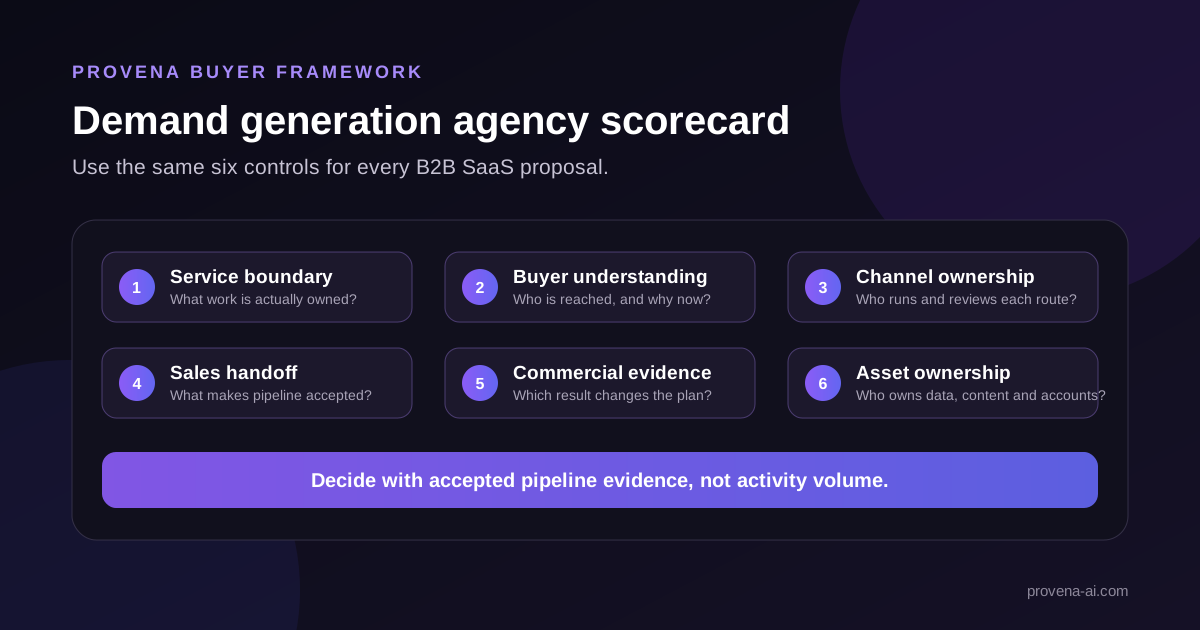
Use the proposal scorecard below with the same target market, growth constraint and accepted pipeline definition for every provider. It does not predict results. It exposes whether scope, ownership and evidence are clear enough to run a contained commercial test.
Which B2B SaaS demand generation agencies deserve a practical test?
Directive: where does it fit?
Directive describes a customer generation model designed to connect demand programmes with pipeline and revenue. Its current service material includes content, paid media, search and account based marketing. Ask which work, media budget, systems and pipeline stages sit inside the proposed engagement. Best fit: growth stage and enterprise b2b technology teams seeking a broad performance marketing partner. Core strength: customer generation across demand strategy, content, paid media, search, account based marketing and measurement. Practical tradeoff: the broad marketing boundary may be more than a team needing only direct outbound or appointment setting.
Gripped: where does it fit?
Gripped presents demand generation, paid media, search, generative engine optimisation and account based marketing for B2B SaaS and technology companies. A buyer should test the proposed buying group, campaign sequence, CRM evidence and the handoff from marketing response to sales acceptance. Best fit: b2b saas and technology companies prioritising integrated demand, paid media, search and account based marketing. Core strength: specialist saas and technology positioning with pipeline oriented demand generation. Practical tradeoff: published fit centres established software and technology teams rather than every early company or direct sales constraint.
Kalungi: where does it fit?
Kalungi describes several support levels ranging from coaching and senior leadership to a full SaaS marketing team. It fits a broader capability gap. Confirm the named leader, delivery roles, internal dependencies, account ownership and the point at which knowledge or execution should return in house. Best fit: saas teams considering external marketing leadership and a wider execution team. Core strength: go to market leadership, positioning, website, content, demand, operations and full service execution. Practical tradeoff: replacing much of a marketing function creates a larger operating and commercial decision.
Powered by Search: where does it fit?
Powered by Search presents demand generation strategy, paid media, search, content and marketing automation for B2B SaaS and technology companies. Ask the team to map its work to the existing funnel, show who owns conversion assets and define how a marketing response becomes accepted pipeline. Best fit: b2b saas companies seeking demand generation through search, paid media, content and lifecycle work. Core strength: a connected acquisition model focused on demos, trials, pipeline and customer economics. Practical tradeoff: its core model differs from a direct outbound team built around researched account conversations.
Provena: where does it fit?
Provena is our own service, so treat this as a disclosed vendor statement. The model fits teams whose immediate need is a connected route from a finite target market to qualified conversations and measurable pipeline. Review the public case studies as named examples, not a forecast for another company. Best fit: vertical b2b saas teams needing direct buyer conversations connected with organic discovery and conversion infrastructure. Core strength: one operating loop across market research, verified data, cold email, linkedin, content, landing pages, reply qualification and supporting software. Practical tradeoff: provena is not positioned as a full paid media department and its scope is set after discovery.
How should a team introduce its chosen approach to B2B SaaS demand generation agencies?
Test B2B SaaS demand generation agencies against a representative workflow before committing. First test: Define the growth constraint, target account, buyer group, offer, sales capacity and accepted pipeline outcome. Include ordinary records, difficult exceptions and the people who will own the system after selection.
- Define the growth constraint, target account, buyer group, offer, sales capacity and accepted pipeline outcome.
- Give every provider the same current funnel evidence, target account sample and commercial objective.
- Require the proposal to name channel scope, delivery staff, buyer research, content, media, conversion and sales handoff ownership.
- Confirm CRM access, attribution method, account ownership, data rights, intellectual property and the clean exit route.
- Run a contained first phase with agreed leading evidence and a sales accepted pipeline measure.
- Review rejected leads, lost opportunities and channel evidence before expanding budget or adding activity.
Record the decision about B2B SaaS demand generation agencies in the campaign brief so the team can revisit it when evidence changes. Keep a dated change log so rules, features and assumptions can be reviewed without rebuilding the whole motion.
Which mistakes distort decisions about B2B SaaS demand generation agencies?
Selection risk around B2B SaaS demand generation agencies usually appears when a polished feature list replaces a real workflow test. Make the following failure modes visible before migration, procurement or a longer commitment.
- Using demand generation, lead generation and appointment setting as interchangeable labels.
- Choosing a provider by its longest service list without defining the one constraint it must change.
- Accepting marketing qualified lead volume when sales acceptance and pipeline evidence remain undefined.
- Leaving media accounts, analytics, content, data or conversion assets under unclear ownership.
- Comparing attributed provider claims as if they were independent forecasts for a different company.
Product capabilities and policies affecting B2B SaaS demand generation agencies change. Verify the current documentation, run a contained test and judge the result against your own workflow before committing.
How should teams measure progress with B2B SaaS demand generation agencies?
Measure the nearest accepted commercial outcome. Record target account engagement, qualified conversations, sales accepted opportunities, sourced and influenced pipeline, conversion by stage, time to acceptance and the reasons leads or opportunities were rejected. Use channel activity to explain the result, not to replace it. Attribution rules and sales stage definitions should be written before the agency starts so a dashboard cannot redefine success later.
Compare the result with the assumptions in the brief, not with a generic internet benchmark. Keep the useful parts, revise one weak variable at a time and stop if the evidence or compliance position is unclear. For adjacent guidance, read The Best B2B Lead Generation Agencies in 2026, Compared by Delivery Model and Top of Funnel to Closed Revenue: What a Real Go to Market System Looks Like, then return to the Go to Market hub for the complete cluster.
Where can Provena support work involving B2B SaaS demand generation agencies?
Provena fits vertical B2B SaaS teams that need researched target accounts, verified contacts, direct outreach, content, conversion pages and supporting software operated as one pipeline system. It is not the automatic choice for a company whose main requirement is a large paid media department. The discovery process should make that fit or mismatch explicit. For B2B SaaS demand generation agencies, Provena builds the research, data, messaging and operating loop around the chosen route. The goal is not more activity for its own sake. It is a controlled system that creates relevant conversations and shows clearly what should change next. See the B2B SaaS lead generation service and review Provena case studies before deciding whether support is appropriate.
Which sources should guide a shortlist for B2B SaaS demand generation agencies?
Provider scope uses current first party service pages. Every provider controls its own claims and can change its packages. Comparative fit, the six control scorecard and the buyer decision framework are independent Provena editorial analysis. The primary references used for this article are Directive B2B demand generation service, Gripped B2B SaaS demand generation service, Kalungi outsourced B2B SaaS marketing service, Powered by Search demand generation service, Provena B2B SaaS lead generation service. Readers should open the current version before making a material decision because guidance, product capability and enforcement practice can change.
Frequently asked questions
What should B2B SaaS founders, marketing leaders and revenue leaders decide first about B2B SaaS demand generation agencies?+
Write down whether the immediate constraint is market clarity, awareness, captured demand, direct conversations, conversion or attribution. Then shortlist agencies whose published service boundary reaches that constraint without hiding the work that remains internal. Write down the owner, desired outcome and boundary of the decision before comparing tactics or products.
What evidence should guide a decision about B2B SaaS demand generation agencies?+
For B2B SaaS demand generation agencies, we reviewed each provider using its current official service material on 27 August 2026. We compared published scope, stated buyer fit, channel boundary, sales handoff and measurement approach. We did not use paid rankings, universal scores or unverified performance claims. Provider scope uses current first party service pages. Every provider controls its own claims and can change its packages. Comparative fit, the six control scorecard and the buyer decision framework are independent Provena editorial analysis.
Which implementation step matters first for B2B SaaS demand generation agencies?+
For B2B SaaS demand generation agencies, define the growth constraint, target account, buyer group, offer, sales capacity and accepted pipeline outcome. Then complete the next control in sequence: Give every provider the same current funnel evidence, target account sample and commercial objective.
Which risk should teams watch with B2B SaaS demand generation agencies?+
For B2B SaaS demand generation agencies, start with this failure mode: Using demand generation, lead generation and appointment setting as interchangeable labels. The next review should also test for choosing a provider by its longest service list without defining the one constraint it must change.
How can Provena support work around B2B SaaS demand generation agencies?+
Provena fits vertical B2B SaaS teams that need researched target accounts, verified contacts, direct outreach, content, conversion pages and supporting software operated as one pipeline system. It is not the automatic choice for a company whose main requirement is a large paid media department. The discovery process should make that fit or mismatch explicit. For work on B2B SaaS demand generation agencies, review Provena's B2B SaaS lead generation service and confirm fit in a conversation before choosing support.