.webp)

Companies and software referenced
Each company links to an official product page or primary source relevant to this guide. Logos identify the referenced organisation and do not imply endorsement.
The best automotive BDC software is the platform that solves the dealership's main operating gap without breaking CRM, DMS, scheduler or human handoffs. A practical 2026 shortlist includes BDC.ai, Impel, STELLA Automotive AI, Numa and CallRevu. Test every candidate against the same five dealership scenarios before choosing one.
Which automotive BDC software belongs on a practical shortlist?
A modern BDC may handle internet leads, inbound calls, texts, long term follow up, sales appointments and service scheduling. Some products conduct conversations, some assist staff and some analyse calls or messages. A dealership can need more than one layer, but treating those layers as interchangeable produces a weak shortlist and duplicate work. The answer must fit the buyer, the people doing the work and the evidence available after launch. A fashionable platform or generic checklist cannot repair weak targeting or unclear ownership.
Choose whether the first requirement is autonomous customer engagement, staff assistance or communication intelligence. Then define the sales or service workflow and map the CRM, DMS, scheduler, phone and inventory records each candidate must read or update. Write the desired business outcome first, then define what must be true for it to occur and which risks require a human decision.
Which criteria matter when assessing automotive BDC software?
We compared each documented product around dealership workflow, data ownership, integration, adoption and the operational effort needed to keep records accurate. For automotive BDC software, we used documented capability and practical fit. No paid placement, invented scores or unsupported performance claims were used. Check current pricing and packaging directly.
| Choice | Best fit | Core strength | Main tradeoff |
|---|---|---|---|
| BDC.ai | dealers seeking dedicated AI agents across sales, service and reception | voice, text and email engagement with appointment and handoff workflow | autonomous actions and system write backs need a controlled pilot |
| Impel | dealer groups connecting AI with sales and BDC lead work | automotive sales engagement, follow up and staff handoff | the wider platform may exceed a narrowly defined BDC requirement |
| STELLA Automotive AI | dealers prioritising inbound conversations and appointment work | automotive voice, routing and outbound appointment communication | buyers must confirm the modules and channels included in the proposed scope |
| Numa | service focused BDCs and groups coordinating calls, texts and customer operations | customer context and service communication across connected dealership systems | sales and service scope should be verified against the current product package |
| CallRevu | dealers improving response, call quality and manager visibility | lead management, communication intelligence and coaching | it should not be assumed to replace every CRM or autonomous agent function |
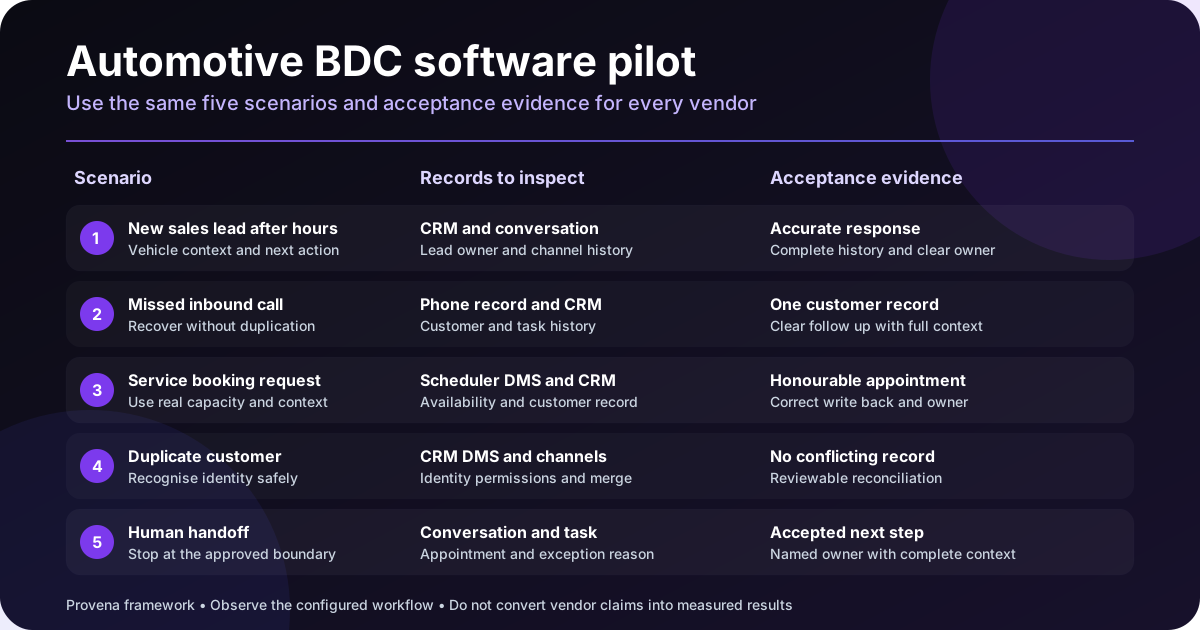
What should a dealership prove in an automotive BDC software pilot?
Replay the same five situations in every shortlisted platform: a new sales lead after hours, a missed inbound call, a service booking request, a duplicate customer and an appointment that needs a human handoff. Record the response, channel history, appointment write back, owner and exception path. This separates a polished demonstration from the configured workflow the dealership will actually operate.
Use one scorecard for customer accuracy, staff effort and accepted outcomes. Check whether the system used the correct vehicle or service context, respected channel and consent rules, updated the accepted CRM or DMS record, transferred the full conversation and produced an appointment the receiving team could honour. Keep vendor performance claims separate from results observed in the dealership pilot.
Download the automotive BDC software pilot scorecard and give every vendor the same test records and acceptance rules. The worksheet deliberately avoids a universal total score. A dealership should retain the observed evidence and decide which failures are tolerable for its own operating model.
Which automotive BDC software deserve a practical test?
BDC.ai: where does it fit?
BDC.ai belongs on the shortlist when a dealer wants one dedicated AI BDC platform across several customer channels. Test the configured CRM, DMS and scheduler connections, the boundary for human escalation and how staff correct a wrong answer or appointment. Best fit: dealers seeking dedicated ai agents across sales, service and reception. Core strength: voice, text and email engagement with appointment and handoff workflow. Practical tradeoff: autonomous actions and system write backs need a controlled pilot.
Impel: where does it fit?
Impel is relevant when the dealership wants AI lead response and follow up connected with a broader customer lifecycle platform. Prove inventory context, channel history, appointment creation, salesperson alerts and the record returned to the existing systems. Best fit: dealer groups connecting ai with sales and bdc lead work. Core strength: automotive sales engagement, follow up and staff handoff. Practical tradeoff: the wider platform may exceed a narrowly defined bdc requirement.
STELLA Automotive AI: where does it fit?
STELLA merits a pilot where call coverage, service workflow or outbound appointment activity is the main constraint. Test live DMS and scheduler availability, transfer behaviour and what happens when a caller asks for an exception the AI cannot resolve. Best fit: dealers prioritising inbound conversations and appointment work. Core strength: automotive voice, routing and outbound appointment communication. Practical tradeoff: buyers must confirm the modules and channels included in the proposed scope.
Numa: where does it fit?
Numa is a candidate when service calls, missed contacts and cross department visibility create the largest workload. Ask the vendor to demonstrate the precise sales and service boundaries, real time system access and the handoff received by a human employee. Best fit: service focused bdcs and groups coordinating calls, texts and customer operations. Core strength: customer context and service communication across connected dealership systems. Practical tradeoff: sales and service scope should be verified against the current product package.
CallRevu: where does it fit?
CallRevu fits dealerships that need a connected view of calls, lead response and conversation quality. Test attribution, CRM integration, coaching workflow and the route from an identified problem to an accepted customer outcome. Best fit: dealers improving response, call quality and manager visibility. Core strength: lead management, communication intelligence and coaching. Practical tradeoff: it should not be assumed to replace every crm or autonomous agent function.
How should a team introduce its chosen approach to automotive BDC software?
Test automotive BDC software against a representative workflow before committing. First test: Map the customer, vehicle, deal, inventory and activity records that must remain authoritative. Include ordinary records, difficult exceptions and the people who will own the system after selection.
- Map the customer, vehicle, deal, inventory and activity records that must remain authoritative.
- Write the ordinary dealership workflow and include difficult exceptions in the demonstration script.
- Confirm manufacturer, marketplace, website, CRM and accounting connections required by the store.
- Test permissions, exports, audit history and recovery after an integration failure.
- Pilot with one store or team and reconcile results against the current source of truth.
- Expand only after staff can complete daily work and managers trust the reporting.
Record the decision about automotive BDC software in the campaign brief so the team can revisit it when evidence changes. Keep a dated change log so rules, features and assumptions can be reviewed without rebuilding the whole motion.
Which mistakes distort decisions about automotive BDC software?
Selection risk around automotive BDC software usually appears when a polished feature list replaces a real workflow test. Make the following failure modes visible before migration, procurement or a longer commitment.
- Choosing a platform around a polished lead form while ignoring the full customer and vehicle journey.
- Assuming every integration is equal without testing fields, timing, ownership and failure handling.
- Migrating duplicate customer and inventory records into the new system.
- Measuring logins or tasks instead of response quality, appointment acceptance and process accuracy.
Product capabilities and policies affecting automotive BDC software change. Verify the current documentation, run a contained test and judge the result against your own workflow before committing.
How should teams measure progress with automotive BDC software?
Measure automotive BDC software through adoption, data accuracy, workflow completion, support burden, implementation time and the commercial outcome the selected system should enable. Compare total operating effort as well as price, then review real exceptions rather than relying only on a dashboard average.
Compare the result with the assumptions in the brief, not with a generic internet benchmark. Keep the useful parts, revise one weak variable at a time and stop if the evidence or compliance position is unclear. For adjacent guidance, read Best Dealership CRM Software in 2026: 5 Options and What Is a BDC Manager? Role, Workflow and Metrics, then return to the Automotive Software hub for the complete cluster.
Where can Provena support work involving automotive BDC software?
Dealership software can organise work, but vendors still need a precise dealer market, accurate contacts and a relevant route to the operator who owns the problem. For automotive BDC software, Provena builds the research, data, messaging and operating loop around the chosen route. The goal is not more activity for its own sake. It is a controlled system that creates relevant conversations and shows clearly what should change next. See the automotive SaaS outbound service and review Provena case studies before deciding whether support is appropriate.
Which sources should guide a shortlist for automotive BDC software?
Capability descriptions come from vendor product material. The selection criteria are independent Provena editorial analysis. The primary references used for this article are BDC.ai platform page, Impel Sales AI page, STELLA Automotive AI platform page, Numa platform page, CallRevu platform page. Readers should open the current version before making a material decision because guidance, product capability and enforcement practice can change.
Frequently asked questions
What should dealership BDC, sales and service leaders decide first about automotive BDC software?+
Choose whether the first requirement is autonomous customer engagement, staff assistance or communication intelligence. Then define the sales or service workflow and map the CRM, DMS, scheduler, phone and inventory records each candidate must read or update. Write down the owner, desired outcome and boundary of the decision before comparing tactics or products.
What evidence should guide a decision about automotive BDC software?+
For automotive BDC software, we compared each documented product around dealership workflow, data ownership, integration, adoption and the operational effort needed to keep records accurate. Capability descriptions come from vendor product material. The selection criteria are independent Provena editorial analysis.
Which implementation step matters first for automotive BDC software?+
For automotive BDC software, map the customer, vehicle, deal, inventory and activity records that must remain authoritative. Then complete the next control in sequence: Write the ordinary dealership workflow and include difficult exceptions in the demonstration script.
Which risk should teams watch with automotive BDC software?+
For automotive BDC software, start with this failure mode: Choosing a platform around a polished lead form while ignoring the full customer and vehicle journey. The next review should also test for assuming every integration is equal without testing fields, timing, ownership and failure handling.
How can Provena support work around automotive BDC software?+
Dealership software can organise work, but vendors still need a precise dealer market, accurate contacts and a relevant route to the operator who owns the problem. For work on automotive BDC software, review Provena's automotive SaaS outbound service and confirm fit in a conversation before choosing support.